
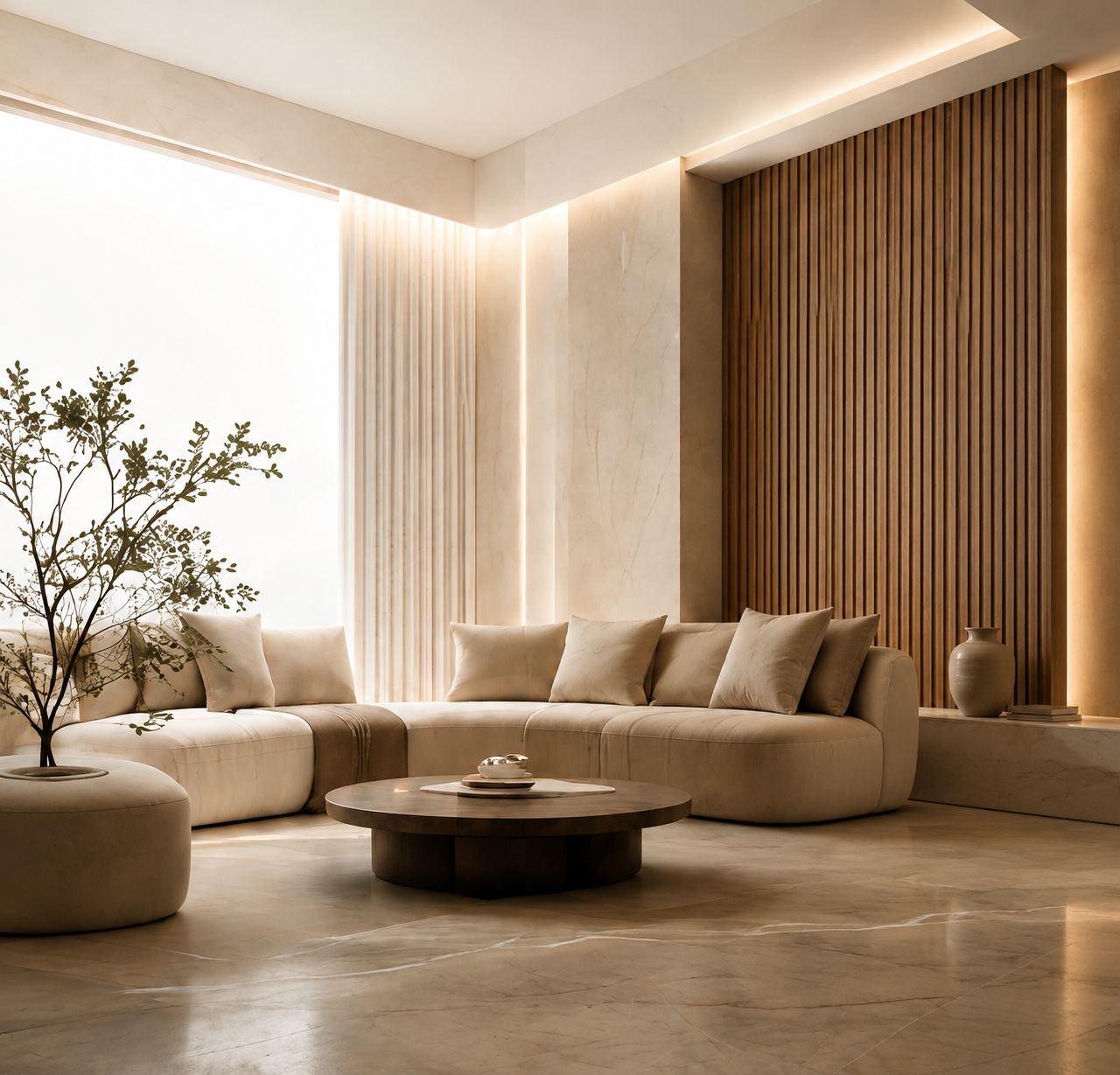
In a Perth market with thousands of near-identical listings, a considered, distinctive property earns more than a generic one at the same address. Design drives the click, the booking and the rate, then delivers the experience that produces five-star reviews. Boutique is not indulgence; it is the most reliable way to move a property from the middle of the market to the top of it.
Scroll the Perth listings for any suburb and you will see the same property over and over: the same grey couch, the same bare walls, the same flat-pack everything. It is not bad. It is just forgettable. And forgettable is the most expensive thing a short-stay property can be. Here is why I have built Artelier Residence around design, and why I think boutique quietly beats bland on the numbers.
Guests choose from a grid of thumbnails
A guest picking a place to stay is scrolling a grid of small photos, making fast decisions. In that moment, distinctiveness is not vanity; it is the entire competitive advantage. A property with a considered look, layered lighting and one memorable feature stops the scroll. Ten identical beige units do not. The design earns the click before a guest has read a word of the description, and the click is the start of everything.
Design earns a higher rate, not just more bookings
The commodity end of the market competes almost entirely on price, which is a race to the bottom in a market with plenty of supply. A distinctive, well-styled property competes on desirability, which lets it hold a higher nightly rate and attract guests who are choosing on more than the cheapest number. The premium is real: across Perth, the gap between the metro-average nightly rate and what genuinely well-presented beachside and boutique properties command is substantial. Design is a large part of what closes that gap.
The experience has to match the photos
Here is the discipline that separates real boutique from staged boutique. A property that looks beautiful in photos and disappoints on arrival gets punished harder than a plain one, because the gap between expectation and reality is where bad reviews are born. So the styling has to be backed by the operational standard: the spotless turnover, the great bed, the basics that just work, the welcome that feels human. Design gets the guest in the door. Delivery earns the five stars that get the next guest in the door. You need both, and boutique only works when the substance is there behind the look.
Boutique is a strategy, not a splurge
None of this means spending recklessly. Over-capitalising on a property whose location cannot support a premium is its own mistake. The point is to match the investment to what the suburb can charge, and then to execute the presentation properly rather than settling for generic. In a beachside or CBD-adjacent property with real demand, a considered fit-out is one of the highest-return decisions an owner can make. In every property, it is the difference between competing on price and competing on desirability.
This is the whole thesis behind how we operate. It runs through our approach to furnishing a Perth short-stay that gets booked and sits at the centre of our short-stay property management service.
Why it matters more every year
Perth’s short-stay market is maturing. Compliance has raised the floor, supply has been cleaned up, and guests have more experience and higher expectations than they did a few years ago. In that environment, “good enough” listings drift toward the average while distinctive, well-run ones pull ahead. The gap between boutique and bland is widening, not closing, and I would rather be on the right side of it.
The bottom line
In a crowded market, distinctiveness is the advantage. Design wins the click, holds the rate and, when it is backed by genuine operational standards, produces the reviews that compound over time. Boutique is not the expensive option. In Perth in 2026, it is the smart one.
This piece reflects Artelier Residence’s operating philosophy and is general information only.